
Dependable Retaining Wall Installation in Lexington, KY
Professional retaining wall installation helps control erosion, support sloped areas, and create more usable outdoor space for Lexington, KY homeowners.
Tell us about your property and the services you need. Our team will review your information and contact you to discuss the next steps.
Retaining walls provide dependable support for sloped areas while helping control erosion, improve drainage, and create more usable space across your landscape. A properly planned wall can also define planting beds, strengthen uneven areas, and improve the property’s overall appearance.
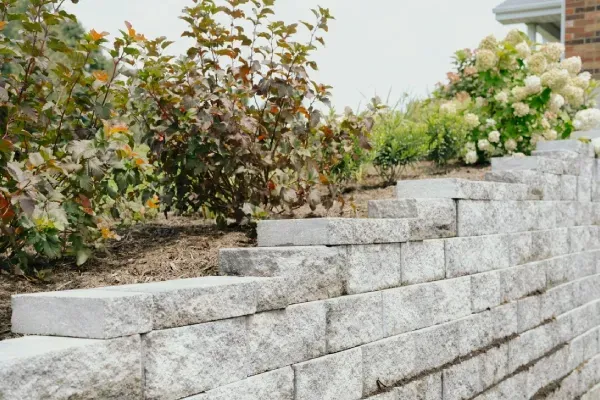
Improve Your Property With a Well-Built Retaining Wall
Retaining walls provide structural support in areas where changes in elevation make the landscape difficult to use or maintain. A properly planned wall can hold back soil, define planting beds, reduce erosion, and create level areas for patios, lawns, or other landscape features. Each project should account for the property layout, soil conditions, drainage, and the amount of pressure placed behind the wall.
Working with an experienced retaining wall contractor helps ensure that the base, materials, reinforcement, and drainage components are installed correctly. These details are important because even a visually appealing wall can shift or lean when the supporting structure is incomplete. Our team evaluates the site and develops an installation plan suited to the conditions of the property.
Reliable Support for Sloped and Uneven Landscapes
Sloped properties can experience soil movement, runoff, erosion, and limited usable space. Retaining wall construction helps control these issues by supporting changes in elevation and creating defined sections throughout the landscape. The finished structure can improve both the function and appearance of the property.
A retaining wall may be recommended when you need to:
- Stabilize soil along a slope
- Reduce erosion caused by runoff
- Create level areas for landscaping
- Define raised planting beds
- Support patios, walkways, or lawn areas
- Improve access across uneven ground
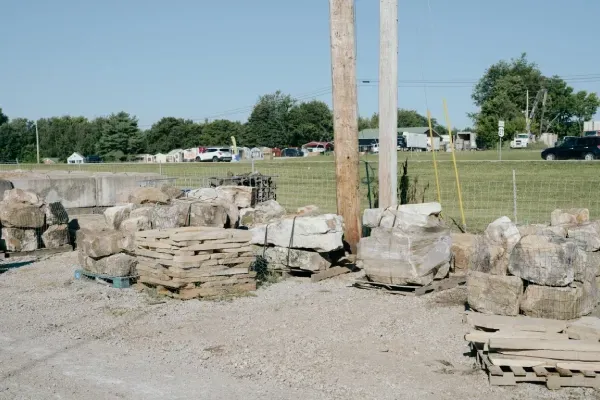
Block Retaining Walls Built for Long-Term Performance
Block retaining wall systems are a practical option for many residential landscapes because they provide strength, consistency, and a clean finished appearance. Blocks are available in different sizes, textures, and styles, making it possible to coordinate the wall with patios, walkways, and other hardscape features. The system can also be adapted to straight walls, curved layouts, steps, and tiered designs.
Proper installation begins with excavation and a compacted base that supports the entire structure. Drainage stone, fabric, reinforcement, and outlet systems may also be required to reduce water pressure behind the wall. Our retaining wall builders complete each stage carefully so the finished wall remains stable and visually balanced.
Our Retaining Wall Installation Process From Site Evaluation to Final Cleanup
Every retaining wall project begins with an evaluation of the area, including the slope, soil, access, drainage, and nearby landscape features. The wall layout and material options are then reviewed so the design supports the property and the homeowner’s goals. Larger or more complex walls may require additional engineering or permitting based on local requirements.
Our typical process includes:
- Property evaluation: We inspect the slope, soil conditions, drainage patterns, and available installation area.
- Wall planning: The height, length, layout, materials, and intended purpose of the wall are established.
- Excavation and base preparation: The area is excavated, and a compacted base is installed to support the structure.
- Wall construction: Blocks, drainage materials, reinforcement, and backfill are installed in planned stages.
- Grading and cleanup: The surrounding soil is adjusted, and the work area is cleaned after construction is completed.
FAQs
Helpful Answers About Retaining Walls
Understanding the installation process can help you plan your retaining wall project with greater confidence. The answers below cover common questions homeowners ask about construction, materials, repairs, and project requirements.
What type of retaining wall is best for my property?
The right wall depends on the slope, soil conditions, wall height, drainage, available space, and desired appearance. Block retaining walls are suitable for many residential applications because they are strong, versatile, and available in multiple styles. Our team evaluates the site before recommending a wall system.
Does a retaining wall need drainage?
Most retaining walls require drainage materials behind the structure to control water pressure. Drainage stone, filter fabric, and outlet pipes may be used depending on the wall design and site conditions. Proper drainage helps reduce shifting, leaning, and premature wall failure.
Can you repair an existing retaining wall?
Some retaining walls can be repaired when damage is limited and the main structure remains stable. Walls with significant leaning, base failure, or widespread separation may need partial or complete replacement. We inspect the existing wall and explain the most practical option.
Do retaining walls require permits?
Permit requirements can vary based on wall height, location, structural design, and local regulations. Taller walls or walls supporting additional loads may require permits or engineering documentation. Our team can discuss the applicable requirements during project planning.