
How to Fix Drainage Problems in Lexington, KY Yards (Standing Water, Erosion & More)
If you’ve ever walked across your yard after a rain and felt your feet sink… or noticed water sitting in the same spot for days… you’re not alone. Drainage problems are one of the most common issues homeowners face in Lexington. And they’re rarely just cosmetic. What starts as a soggy area or a muddy patch can lead to:
Lawn damage
Foundation concerns
Erosion around your property
Ongoing frustration every time it rains
The challenge is that drainage issues don’t always have a simple, one-size-fits-all fix. But they are fixable. This guide will help you understand why they happen in Lexington, how to identify what’s going on in your yard, and what options you have to correct it the right way.
Why Drainage Problems Are So Common in Lexington
A lot of drainage issues in this area come down to one thing: Clay-heavy soil.
Most properties in Lexington have soil that:
Drains slowly
Compacts easily
Holds water near the surface
This creates a few natural challenges:
Water doesn’t absorb quickly after rain
Surface runoff builds up in low areas
Soil becomes dense and harder over time
Add in:
Sloped properties
Gutter runoff
Older grading around homes
And it becomes easy to see why water doesn’t always move the way it should. In many cases, the issue isn’t just “too much water.” It’s that the water has nowhere to go.
Signs Your Yard Has a Drainage Problem
Not all drainage issues are obvious right away. Some develop slowly over time. Here are the most common signs to watch for:
Water pooling in the same areas after rain
Soft, muddy spots that don’t dry out
Grass that struggles or dies in certain sections
Erosion along slopes or near downspouts
Water collecting near your home’s foundation
Mulch or soil washing away after storms
If you’re seeing one or more of these consistently, it’s usually a sign that the underlying drainage needs to be addressed, not just managed.
What’s Causing the Problem?
Before you can fix drainage, it’s important to understand what’s actually creating the issue. In most Lexington yards, it’s a combination of a few factors:
1. Poor Grading
Your yard should naturally guide water away from your home. If the grading is flat, or worse, slopes toward the house, water will collect instead of draining properly.
2. Compacted Soil
Clay soil becomes dense over time, especially with foot traffic or construction. When soil is compacted:
Water can’t penetrate easily
Runoff increases
Roots struggle to grow
3. Downspout and Gutter Placement
Roof runoff concentrates a large amount of water in specific areas. If downspouts:
End too close to the house
Discharge into low spots
they can quickly overwhelm the surrounding ground.
4. Natural Low Areas
Some yards simply have areas where water naturally settles. Without proper drainage, these spots become:
Persistent puddles
Muddy zones
Difficult areas for grass to survive
5. Erosion and Water Flow Patterns
On sloped properties, water gains speed as it moves downhill. Over time, this can:
Wash away soil
Create channels or ruts
Undermine landscaping features
Simple DIY Tests to Understand Your Yard
Before jumping into solutions, you can do a few quick checks to better understand what’s happening.
The Water Test
Pick a problem area and:
Pour a bucket of water onto the soil
Watch how long it takes to absorb
If water sits for more than a few minutes, drainage is likely restricted.
The Observation Test
After a rain, take a walk through your yard and look for:
Where water collects
How it flows
Where it exits (or doesn’t)
This gives you a clearer picture of whether the issue is absorption, direction, or both.
Proven Solutions for Drainage Problems
The right solution depends on what’s causing the issue. Here are the most effective approaches used in Lexington yards.
1. Regrading the Yard
If the slope of your yard is working against you, regrading can correct it. This involves:
Adjusting soil levels
Creating a subtle slope away from structures
Redirecting water flow
This is often the most foundational fix, especially near the home.
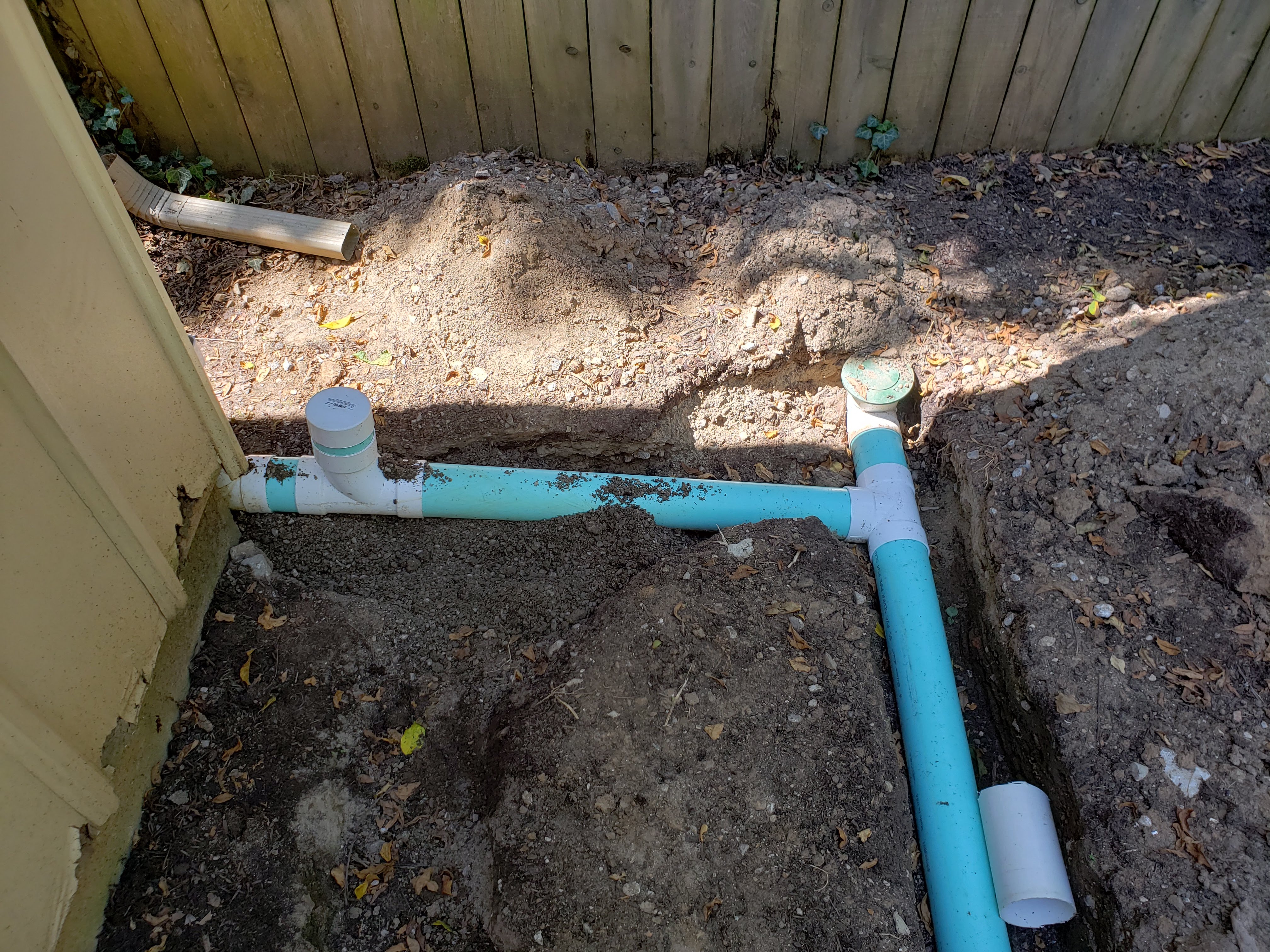
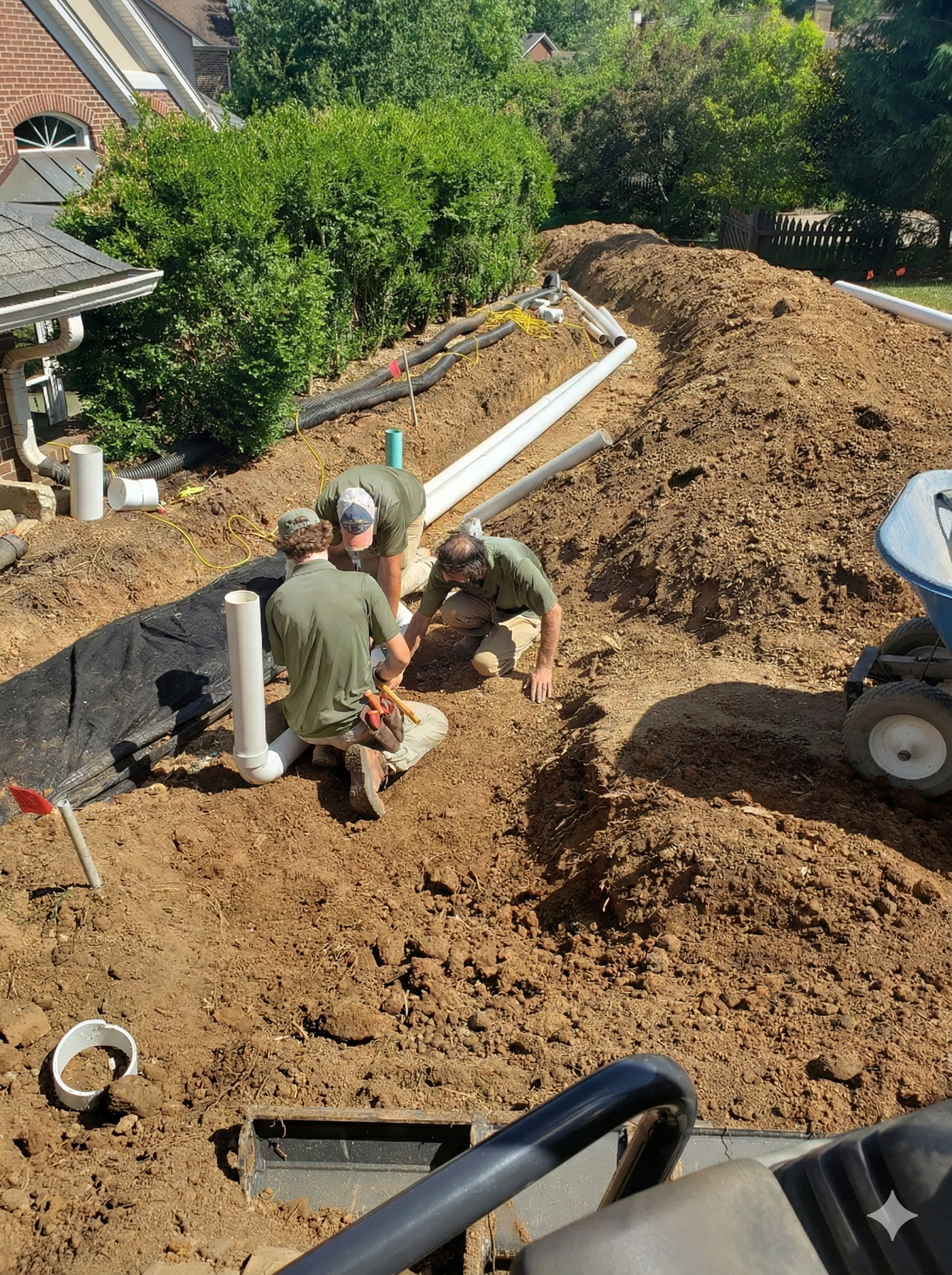
2. French Drains
A French drain is one of the most common and effective drainage solutions. It works by:
Collecting water underground
Moving it through a perforated pipe
Redirecting it to a safer discharge point
Best for:
Persistent standing water
Low areas that don’t drain naturally
In clay-heavy soil, French drains help move water where the soil won’t.
3. Downspout Extensions
Sometimes the issue is simpler than it looks. Extending downspouts:
Moves water further away from the home
Reduces saturation near foundations
Prevents pooling in key areas
This is often one of the easiest and most cost-effective improvements.
4. Dry Creek Beds
For areas with visible water flow, a dry creek bed can be both functional and visually appealing. It:
Directs water along a controlled path
Reduces erosion
Adds a natural design element
This works well for properties with slopes or recurring runoff patterns.
5. Soil Improvement and Aeration
If the issue is slow absorption, improving the soil can help. This may include:
Aeration
Adding organic material
Reducing compaction over time
While this doesn’t solve major drainage problems alone, it improves overall performance.
What Does a Drainage Solution Cost in Lexington?
Costs can vary depending on the scope of the issue and the solution needed. Here’s a general idea:
Downspout extensions: Low cost
Aeration and minor improvements: Moderate
French drains: Moderate to higher investment
Regrading or larger systems: Higher investment
The key is matching the solution to the problem. Overbuilding can be just as frustrating as under-solving.
Common Mistakes to Avoid
Drainage is one of those areas where quick fixes often lead to bigger problems later. Some of the most common mistakes include:
Treating symptoms instead of the root cause
Installing drains without addressing grading
Ignoring where water is ultimately directed
Overcomplicating simple issues
Underestimating how water behaves during heavy rain
The goal isn’t just to move water. It’s to move it predictably and consistently.
What a Well-Drained Yard Looks Like
When drainage is working properly, you’ll notice:
No standing water after rain
Soil that dries at a normal pace
Healthy, consistent lawn growth
No erosion or washout areas
Water moving away from your home naturally
It doesn’t mean your yard is dry all the time. It means it recovers quickly and behaves predictably.
Final Thoughts
Drainage problems can feel frustrating because they don’t always have obvious solutions.
But in most cases, the issue comes down to:
How water moves
Where it collects
And how the soil responds
Once those pieces are understood, the solution becomes much clearer.
Need Help Evaluating Your Yard’s Drainage?
If you’re dealing with standing water, soggy areas, or erosion and want to understand what’s actually causing it, we’re happy to take a look. We can walk your property with you, identify what’s happening beneath the surface, and outline the options that make sense for your space.