Retaining Wall Options in Lexington, KY (Materials, Costs & Design Ideas for Sloped Yards)
Best Retaining Wall Options for Lexington, KY Homes (Materials, Cost & Design Ideas)
If your yard has a slope, drainage issues, or areas that feel difficult to use, a retaining wall might already be on your radar. For many homeowners in Lexington, it’s not just a design feature. It’s a practical solution to:
Manage elevation changes
Prevent erosion
Improve drainage
Create usable outdoor space
But like most landscaping decisions, the challenge isn’t just whether to build a retaining wall. It’s understanding:
What type you need
What it should cost
And how to make sure it’s done correctly
This guide will walk you through the options, what matters most in Kentucky conditions, and how to approach the decision with confidence.
Why Retaining Walls Matter in Lexington
Lexington properties often come with natural elevation changes. Combine that with:
Clay-heavy soil
Heavy rainfall at times
Water that doesn’t absorb quickly
And you get conditions where:
Soil shifts
Erosion occurs
Water builds up in the wrong places
A properly built retaining wall helps:
Hold soil in place
Control water movement
Create level, usable areas
In many cases, it’s not just about improving appearance. It’s about stabilizing your landscape long-term.
Common Retaining Wall Materials (and How They Compare)
Not all retaining walls are built the same. The material you choose affects:
Cost
Appearance
Durability
Maintenance
Here’s how the most common options compare.
🪨 Concrete Block (Segmental Retaining Walls)
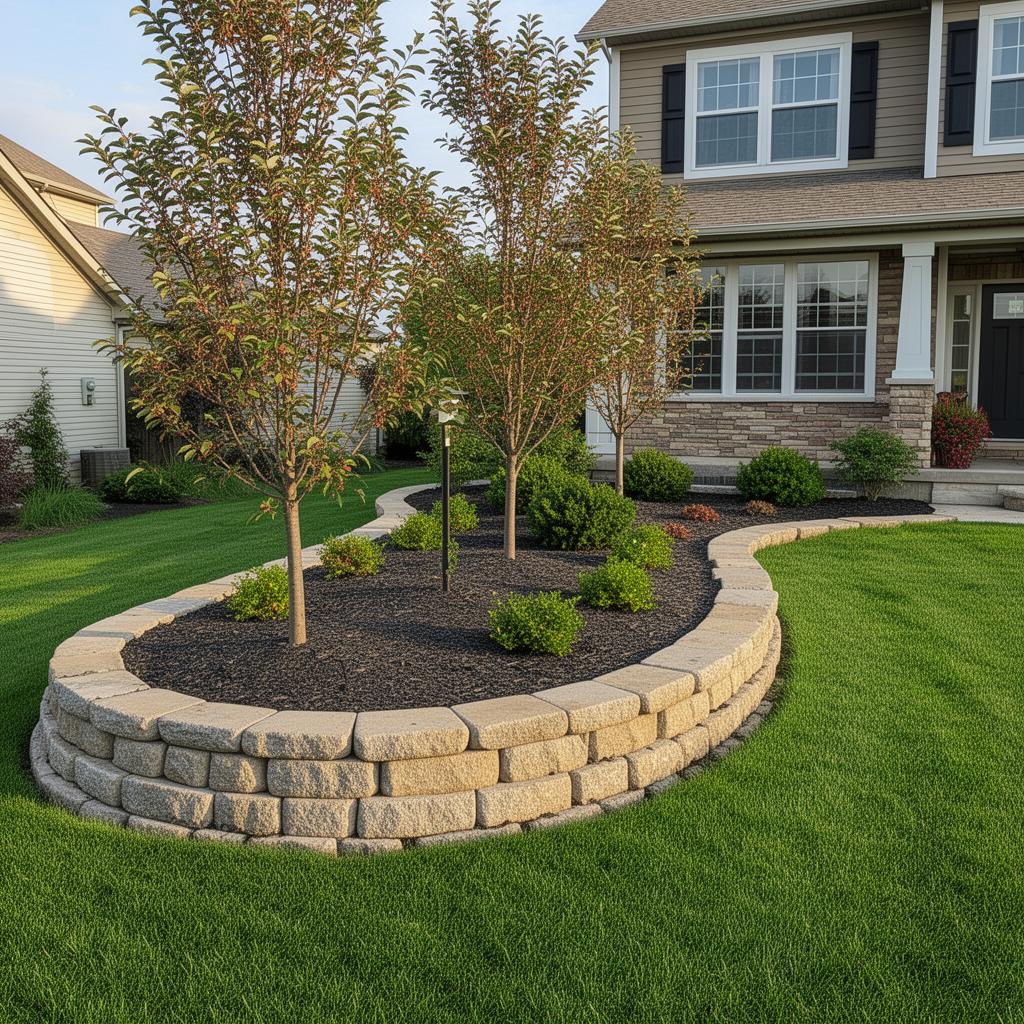
This is one of the most popular choices in Lexington.
Why homeowners choose it:
Strong and durable
Designed specifically for retaining applications
More consistent installation process
Wide range of styles and colors
What to know:
Requires proper base preparation and drainage
Appearance is clean and structured
This is often the most practical and reliable option for many properties.
Timber Walls

Timber walls are sometimes used for smaller or more temporary applications.
Pros:
Lower upfront cost
Natural appearance
Cons:
Shorter lifespan (especially in wet conditions)
More prone to rot over time
In Kentucky’s moisture-heavy environment, timber is usually best for short-term or decorative use, not long-term structural solutions.
Natural Stone
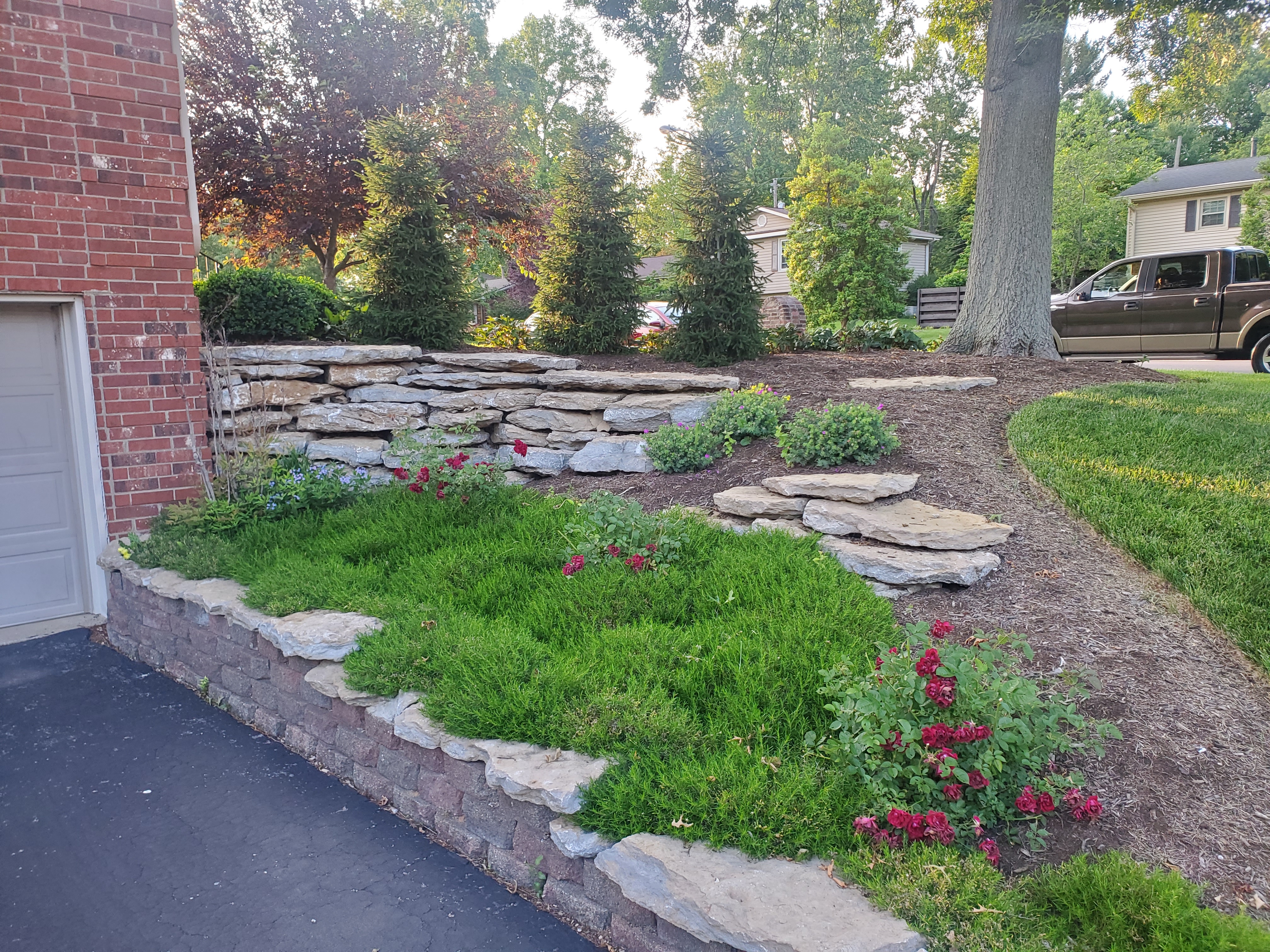
Natural stone creates a more custom, high-end look.
Pros:
Unique, organic appearance
Blends well into natural landscapes
Cons:
Higher cost
More labor-intensive installation
Requires experienced design and build
This is a good option when aesthetic is a top priority, but it requires careful planning.
Poured Concrete
Poured concrete walls are strong and functional.
Pros:
High structural strength
Long lifespan
Cons:
More industrial appearance
Less flexibility in design
Can crack over time if not installed properly
Often used in more structural applications, but less common for residential landscapes focused on design.
Retaining Wall Costs in Lexington, KY
Costs can vary depending on:
Height of the wall
Length
Material
Site conditions
Drainage requirements
General price ranges:
Basic retaining wall: $40–$80 per square foot
More complex or taller walls: $80–$150+ per square foot
Factors that increase cost:
Excavation difficulty
Limited access
Drainage system requirements
Reinforcement (for taller walls)
Drainage: The Most Important Part Most People Don’t See
If there’s one thing that determines whether a retaining wall lasts, it’s not the material. It’s the drainage behind it. Without proper drainage:
Water builds up behind the wall
Pressure increases
Walls can shift, lean, or fail over time
A properly built wall includes:
Gravel backfill
Drain pipe (often called a French drain)
Proper grading to move water away
This is where many problems start—not immediately, but months or years later.
Retaining Wall Height and Design Considerations
Height matters more than most homeowners expect.
For shorter walls (under ~3–4 feet):
Simpler construction
Fewer structural requirements
For taller walls:
May require engineering
Additional reinforcement
More complex drainage systems
In some cases, it’s better to:
Use tiered walls (multiple shorter walls)
Create a more natural transition in elevation
This often improves both function and appearance.
Design Ideas That Work Well in Lexington Yards
Retaining walls don’t have to feel purely functional. When designed well, they become part of the overall landscape. Some effective approaches:
✔️ Tiered Garden Beds
Break up slopes into usable planting areas
Add visual interest
Improve accessibility
✔️ Integrated Seating Walls
Combine structure with usability
Great for patios and gathering spaces
✔️ Natural Transitions with Planting
Soften the look of walls
Blend structure into the landscape
✔️ Walkway and Stair Integration
Improve flow through sloped areas
Make spaces easier to navigate
The best designs feel like the wall was always meant to be there—not added as an afterthought.
Common Retaining Wall Mistakes
Retaining walls are one of the areas where shortcuts tend to show up later. Some of the most common issues include:
Skipping proper base preparation
Ignoring drainage requirements
Underestimating height and load
Choosing materials based only on cost
Not accounting for long-term soil movement
These mistakes don’t always fail immediately. But over time, they lead to:
Leaning walls
Cracking
Water issues returning
What a Well-Built Retaining Wall Looks Like
When a retaining wall is done correctly, you’ll notice:
Clean, level lines
No visible shifting or leaning
Proper drainage (no water pooling behind or around it)
Integration with the surrounding landscape
Stable soil and reduced erosion
It should feel:
Solid
Intentional
And consistent over time
Final Thoughts
A retaining wall is one of those projects where getting it right the first time matters. Because it’s not just about appearance. It’s about:
Stability
Water management
Long-term performance
When those pieces are handled properly, the result is a space that feels easier to use, easier to maintain, and more predictable over time.
Thinking About a Retaining Wall for Your Property?
If you’re dealing with a slope, erosion, or areas of your yard that feel difficult to manage, we’re happy to walk through it with you. We can evaluate your property, explain what’s happening beneath the surface, and outline the options that would work best for your space. Give us a call!